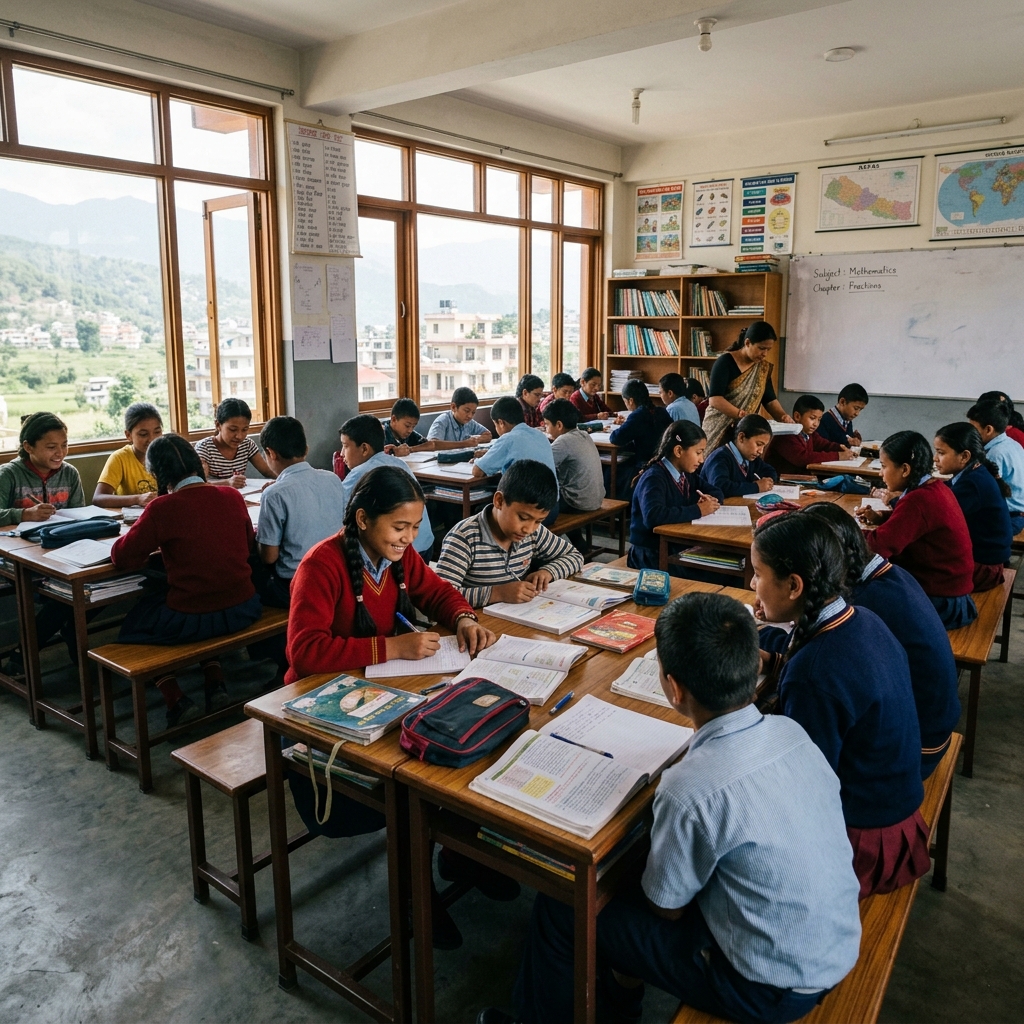
I walked 4 kilometers to school barefoot. Today, I'm working to ensure no child in Madhesh has to make that journey. This is the story of how education changed everything — and why I refuse to let it remain a privilege.
There's a photograph somewhere in my mother's steel trunk — a small boy in oversized clothes, standing outside a tin-roofed school in rural Mahottari. That boy had no idea that education would become both his personal salvation and his life's mission.
The 4-Kilometer Walk That Shaped Everything
Every morning at 5:30 AM, I would begin the walk from our village to the nearest primary school. There were no buses, no bicycles — just a narrow dirt path that became a river during monsoon. My mother would wrap my notebooks in plastic bags because she knew the rain would come.
I wasn't unique. Hundreds of children across Madhesh made similar journeys. The difference? Many of them stopped making it. By class 5, half my classmates had dropped out. By class 8, I was one of only four students from my village still attending school.
What I Learned Beyond the Classroom
That walk taught me more than any textbook. It taught me that education in Nepal is not a right enjoyed equally — it's a privilege distributed by geography and circumstance. A child born in Kathmandu and a child born in rural Mahottari face fundamentally different odds.
The Gap That Still Exists
- Madhesh Province has the lowest secondary school completion rate in Nepal at 34%
- Only 12% of girls from rural Terai complete class 10
- Teacher-to-student ratios in Province 2 average 1:65, compared to 1:28 nationally
- Less than 8% of schools have functional computer labs
"Education is the one investment that multiplies across generations. When you educate a child in Madhesh, you transform not just a family — you transform a community."
Building the Bridge
Through the PSP Nepal education initiative, we've established 15 scholarship programs specifically targeting first-generation learners from marginalized communities. Last year alone, 340 students received support to continue their education.
But scholarships are a bandage on a deeper wound. What we truly need is systemic reform — more schools, better teachers, modern curriculum, and the political courage to prioritize education spending in Province 2. That's the fight I'm committed to, because I know what it feels like to almost not make it.